Collaborative
Networks
The Evolutionary & Systemic Architecture of Collaboration
From eusocial superorganisms to human-AI co-creation — how synergy drives the emergence of complexity across every scale of life.
Begin ExplorationCooperation vs. Collaboration
The ontological distinction: while often used interchangeably, these terms describe fundamentally different relationships of interdependence.
The prevailing cultural narrative focused on “survival of the fittest” — competition, aggression, individual advantage. But evidence from evolutionary biology, neuroscience, geopolitics, and AI reveals that collaboration is the fundamental engine of systemic complexity and resilience. Nature is characterized by a pervasive drive toward synergy. From eusocial ant colonies to multi-agent AI workflows, aligning discrete entities toward shared objectives represents the highest evolutionary achievement.
Cooperation
A transactional mode of engagement describing why individuals work together — primarily to achieve shared goals through a division of labor where each participant remains responsible for a specific, compartmentalized portion.
Parallel process → Assembly
Collaboration
An entangled state describing how individuals work together — co-creating a shared goal with collective ownership, producing an emergent result no single individual could have produced alone.
Entangled process → Emergent output
| Dimension | Cooperation | Collaboration |
|---|---|---|
| Primary Driver | Transactional efficiency and mutual benefit | Shared vision and co-creation of knowledge |
| Task Structure | Division of labor; separate tasks | Integrated effort; shared problem-solving |
| Goal Alignment | Individual goals aligned toward shared direction | Fully shared and integrated goals |
| Ownership | Resides with individuals for their specific parts | Shared authorship and collective responsibility |
| Communication | Informational and transactional | Generative, exploratory, and discursive |
| Interdependence | Moderate; participants do not overlap deeply | High; participants are deeply intertwined |
| Typical Output | Sum of its parts; additive | Greater than the sum of its parts; emergent |
| Failure Mode | Divergence of individual motives | Breakdown in shared cognitive processes |
Key Insight: Collaborative learning leads to deeper information processing and more meaningful psychological connections. However, it is “messier” and more cognitively demanding, requiring trust, vulnerability, and the surrender of individual control. Failure to distinguish these modes often leads to “pseudo-collaboration” — where teams confuse pleasant, cooperative behavior with rigorous, strategy-aligned work.
Modern Structures: A Collaboration Audit
We rated the institutions that govern daily life against the collaboration spectrum. The results are damning: we barely cooperate, and almost never truly collaborate.
Across eight foundational institutions of modern society, the average collaboration score is 22% — barely clearing the threshold for coordination, and nowhere near genuine collaboration. Our structures are not designed for synergy; they are designed for compliance, competition, and control.
Education System
CoordinationStudents sit in rows facing forward, absorbing information from a single authority figure. Assessment is entirely individual — standardized tests punish collaboration as 'cheating.' Group projects exist but are graded individually, rewarding free-riders and punishing slower learners. The system was designed in the Industrial Revolution to produce compliant factory workers, not collaborators.
A 2024 OECD study found that only 12% of classroom time across 38 countries involves genuine collaborative problem-solving. 88% is individual seatwork or teacher-led lecture.
Pure coordination — students are scheduled into rooms, told not to interfere with each other, and assessed alone.
Corporate Workplace
Low CooperationDespite 'collaboration' being the most-used word in corporate mission statements, most workplaces operate on competitive hierarchies. Performance reviews are individual, bonuses are zero-sum pools, and promotions pit colleagues against each other. Open-plan offices were sold as collaboration tools but studies show they reduce face-to-face interaction by 73%.
Harvard Business School (2018) found open offices decreased face-to-face interaction by 73% and increased email by 67%. McKinsey (2023) reports employees spend 60% of time on 'work about work' — coordination overhead, not collaboration.
Cooperation at best — teams share updates in meetings but protect their own metrics, budgets, and headcount.
Government & Bureaucracy
CoordinationGovernment departments are the epitome of siloed coordination. Each ministry operates with its own budget, KPIs, and political incentives. Inter-departmental collaboration requires formal memoranda, committee approvals, and months of negotiation. The system is structurally designed to prevent overlap, which also prevents synergy.
The UK Institute for Government (2024) found that cross-departmental policy initiatives take on average 3.2× longer to implement than single-department ones, with a 68% higher failure rate.
Rigid coordination — departments avoid interference with each other but rarely co-create policy.
Healthcare
Low CooperationHealthcare is organized into rigid specialist silos. A patient with diabetes, depression, and back pain sees three separate doctors who rarely communicate. EMR systems are interoperable in theory but fragmented in practice. Nurses, often closest to patients, are excluded from treatment planning. Multidisciplinary team meetings exist but are often performative — decisions are made by the senior consultant.
WHO (2023) estimates that poor care coordination causes 2.6 million deaths annually in OECD countries. The Joint Commission reports communication failures as the #1 root cause of sentinel events.
Cooperation with coordination — specialists share records but do not co-create treatment plans.
Legal System
CompetitionThe adversarial legal system is structurally designed as competition. Two sides argue against each other; a judge or jury declares a winner. Even in civil cases, 'collaboration' between parties is called 'collusion' and is illegal. Mediation and restorative justice exist as alternatives but represent less than 5% of case resolutions in most jurisdictions.
The American Bar Association (2024) reports that adversarial litigation accounts for 94% of all case processing. Restorative justice programs, despite 27% lower recidivism rates, are available in fewer than 8% of US jurisdictions.
Structural competition — the system requires opposing parties and punishes alignment.
Urban Planning & Housing
CoordinationModern cities are zoned into isolated blocks: residential here, commercial there, industrial elsewhere. This fragmentation forces car dependency and eliminates the organic social mixing that creates community. Suburban sprawl is the spatial manifestation of anti-collaboration — everyone in their own box, commuting alone.
Robert Putnam's 'Bowling Alone' (2000) documented a 58% decline in community group participation since 1970, directly correlated with suburban sprawl and commute times over 25 minutes.
Coordination — planning prevents interference (noise, pollution) but does not foster integration.
Democratic Politics
CompetitionTwo-party and first-past-the-post systems are structurally adversarial. Politicians are incentivized to oppose rather than collaborate — bipartisanship is punished by primary voters. Parliamentary procedure is literally organized as 'government vs. opposition.' Coalition governments, common in proportional systems, are the closest to cooperation but are often described as 'unstable.'
Pew Research (2024) found that partisan antipathy has tripled since 1994. Congressional cross-party bill co-sponsorship has dropped 64% since 2000. The Economist Democracy Index (2024) rates 'political participation' at its lowest since tracking began.
Institutional competition — the system rewards opposition and punishes alignment.
Scientific Research
CooperationScience aspires to collaboration but is structurally competitive. The publish-or-perish model incentivizes secrecy before publication, data hoarding, and priority disputes. Peer review is anonymous adversarial critique. Funding is zero-sum — grant success rates average 15-20%, forcing researchers to compete rather than collaborate. Notable exceptions like CERN and ITER prove what's possible when structural incentives are realigned.
Nature (2024) reports grant success rates have fallen to 15% in the US and 18% in the EU, creating a 'hypercompetitive' environment. A 2023 meta-analysis found that 67% of researchers admit to withholding data from competitors.
Cooperation with competitive undercurrents — researchers share published findings but guard unpublished work fiercely.
Comparative Collaboration Scores
The Uncomfortable Truth: Not a single major institution in modern society operates at the level of true collaboration. At best, we achieve episodic cooperation. At worst — in law, politics, and education — our systems are structurally adversarial. We have built a civilization that talks about collaboration while engineering competition into every incentive, every metric, and every reward.
Barriers to Collaboration
Collaboration isn't just rare by accident — it is systematically suppressed by the design of every institution, incentive, and cultural norm we operate within.
We identified 10 systemic barriers that actively prevent collaboration at every stage of human life — from the classroom to the boardroom to the ballot box. These are not individual failures; they are design failures. Our systems were built for an industrial age that valued compliance and competition. They have never been redesigned for the collaborative age that biology, neuroscience, and AI demand.
Competition is Rewarded at Every Stage of Life
From school grades to employee rankings to market share, every major institution uses zero-sum metrics. Class rank, bell-curve grading, 'employee of the month,' stack ranking — all structurally ensure that one person's success requires another's relative failure. Collaboration is not merely unrewarded; it is actively penalized.
School: Standardized tests rank individuals. Helping a peer is 'cheating.'
Work: Stack ranking (used by Microsoft until 2013, still common) forces managers to label a fixed % as underperformers regardless of team success.
Science: The Nobel Prize goes to a maximum of 3 people, even when breakthroughs involve hundreds of researchers.
Time Structures Prevent Deep Engagement
True collaboration requires sustained, uninterrupted time for ideas to evolve through friction and synthesis. Modern schedules are chopped into 45-minute class periods, 30-minute meetings, and 15-minute stand-ups. Cal Newport's research shows that meaningful collaborative cognition requires 90+ minutes of unbroken focus — something almost no institution provides.
School: Subjects change every 45 minutes, preventing interdisciplinary collaboration.
Work: The average knowledge worker is interrupted every 3 minutes. It takes 23 minutes to regain deep focus (UC Irvine, 2023).
Meetings: 71% of meetings are rated as unproductive by attendees (Harvard Business Review, 2024).
Hierarchies Suppress Emergent Collaboration
Collaboration requires psychological safety — the belief that you can speak up without punishment. Steep hierarchies destroy this. When a junior employee's idea can be vetoed by a senior person simply because of rank, the 'entangled co-creation' that defines true collaboration becomes impossible. Information flows up and commands flow down; synergy requires lateral flow.
School: Teachers are authority figures. Students who challenge ideas are 'disruptive.'
Work: Google's Project Aristotle (2015) found psychological safety was the #1 predictor of team effectiveness — but most organizations structurally undermine it through hierarchy.
Military: Rigid command chains optimize coordination but prevent the adaptive collaboration needed in irregular warfare.
We Never Teach Collaboration as a Skill
Reading, writing, and arithmetic are explicitly taught for 12+ years. Collaboration — negotiation, perspective-taking, conflict resolution, shared cognition — is assumed to emerge naturally or is assigned as unstructured 'group work.' No curriculum teaches how to build shared mental models, how to give generative feedback, or how to navigate the cognitive friction that real collaboration demands.
No country includes 'collaborative cognition' as a core curriculum subject.
Teacher training programs spend an average of 4 hours total on collaborative pedagogy (OECD, 2024).
'Group work' in schools is typically divide-and-conquer (cooperation), not integrated problem-solving (collaboration).
Economic Models Assume Rational Self-Interest
Neoclassical economics — the theoretical foundation of modern capitalism — assumes that all agents are rational, self-interested maximizers. This 'Homo economicus' model explicitly excludes collaborative motivations like altruism, fairness, and shared purpose. Every policy, incentive structure, and organizational design built on this model is structurally hostile to collaboration.
GDP measures individual transactions, not collaborative value creation or social capital.
Tax policy rewards individual accumulation, not shared resource management.
Corporate law requires fiduciary duty to shareholders, not stakeholders or collaborative ecosystems.
Individual Attribution Bias
Humans have a deep cognitive bias toward attributing outcomes to individuals rather than systems or groups. We create 'great man' narratives for every achievement — Steve Jobs invented the iPhone, Einstein discovered relativity — erasing the thousands of collaborators who made it possible. This attribution bias means collaborative success is invisible while individual achievement is celebrated.
The 'lone genius' myth persists despite research showing virtually all breakthroughs are team efforts (Wuchty et al., 2007).
Leadership studies focus on individual traits rather than relational dynamics.
Social media rewards individual content creators, not collaborative communities.
Physical and Digital Isolation
Modern life is architecturally isolating. Single-family homes, private cars, cubicles, headphones, and now remote work — every trend pushes toward individual bubbles. Digital 'social' media creates the illusion of connection while actually reducing the deep, sustained interaction that collaboration requires. You cannot co-create in a Slack thread.
Average American commute: 55 minutes/day alone in a car (Census Bureau, 2023).
Remote workers report 67% fewer spontaneous collaborative interactions (Microsoft Work Trend Index, 2024).
Social media use correlates with increased loneliness, not decreased (Twenge, 2024).
Technology Optimizes for Individual Productivity
Productivity software — email, to-do lists, personal dashboards — is designed for individual output. Even 'collaboration tools' like Google Docs or Figma optimize parallel cooperation (multiple people editing the same artifact) rather than true entangled collaboration (co-creating something neither could alone). The technology mirrors and reinforces the individualist paradigm.
AI assistants (Siri, Alexa, ChatGPT) are designed for 1-on-1 interaction, not group facilitation.
Project management tools (Jira, Asana) track individual task completion, not collaborative emergence.
The entire 'personal computer' paradigm is literally named for individual use.
Intellectual Property Prevents Knowledge Sharing
Patents, copyright, trade secrets, and NDAs are all legal instruments designed to prevent the free flow of information — the very lifeblood of collaboration. The patent system was intended to incentivize innovation by granting temporary monopolies, but in practice it creates 'patent thickets' that block collaborative development and concentrate power in organizations that can afford legal armies.
Pharmaceutical companies spend more on patent litigation than on R&D for neglected diseases.
The 'smartphone patent wars' (2010-2016) cost the industry an estimated $20 billion in legal fees that could have funded collaborative R&D.
Academic journals lock publicly-funded research behind $30-per-article paywalls.
Individualism as Moral Virtue
Western culture specifically — but increasingly global culture — treats individual achievement as the highest moral virtue. 'Self-made,' 'self-reliant,' 'self-starter' — the language itself reveals the ideology. Asking for help is weakness. Needing others is dependency. This cultural operating system makes collaboration feel psychologically threatening because it requires admitting you cannot do it alone.
The 'American Dream' is explicitly individual — each person rising on their own merits.
Self-help is a $14 billion industry; 'group-help' or 'community-building' barely registers as a category.
Social safety nets are politically framed as 'dependency,' not as collaborative infrastructure.
The Wall Between Us and True Collaboration
The Design Challenge: Every barrier listed above was designed by humans and can be redesigned by humans. The path to a collaborative society is not about changing human nature — evolution has already equipped us with mirror neurons, oxytocin, and inter-brain synchrony. The path is about redesigning the systems that suppress what biology has already given us.
The Spectrum of Shared Agency
Collaboration exists on a spectrum from simple coordination to deep co-evolution. Understanding where a relationship sits is critical for optimizing performance.
Co-evolution
The deepest and most stable form. Each party is structurally and functionally shaped by the other over time.
Examples: Human gut microbiome, flowers & pollinators
Collaboration
The threshold of co-creation. The goal is no longer divisible into individual parts; participants function as a single unit.
Examples: Joint R&D teams, creative partnerships
Cooperation
Mutual assistance to achieve individual ends. Governed by reciprocal altruism — 'you scratch my back, I scratch yours.'
Examples: Trade agreements, bilateral treaties
Coordination
The lightest form — focused on timing and avoidance of interference. Entities adjust actions to prevent disruption.
Examples: Traffic systems, diplomatic protocols
Critical Insight for Leaders: Most “collaboration initiatives” fail because they are actually coordination or cooperation efforts masking themselves as collaboration. True collaboration requires making tough decisions, adjusting workloads across disparate priorities, and accepting shared responsibility — exactly where interdepartmental structures break down.
The Geopolitical Continuum
Modern geopolitical theory has moved away from the binary of "war or peace" toward a linear continuum of persistent competition.
At the center of this paradigm is the “No War, No Peace” (NWNP) category — characterized by elevated distrust, aggressive maneuvering, and hybrid warfare tactics below the threshold of conventional military conflict. States employ “Grey Zone” activities — coercive yet ambiguous actions designed to achieve strategic gains without triggering armed response.
Simultaneity of Stages
A state can be in deep collaboration with an ally in the economic domain while simultaneously engaging in competition in the technological or space domains. The spectrum is not a single position but a multi-dimensional reality.
Salami-Slicing Tactics
Revisionist powers make incremental changes — individually minor but cumulatively altering the geostrategic landscape — to “boil the frog” and prevent decisive response. Success in this domain is fundamentally cognitive: a struggle for legitimacy.
The Biological Blueprint
78 species mapped on the Animal Collaboration Scale — from eusocial superorganisms to deeply solitary predators. Click any species to explore their collaborative behaviors in depth.

Leafcutter Ant
Atta cephalotes
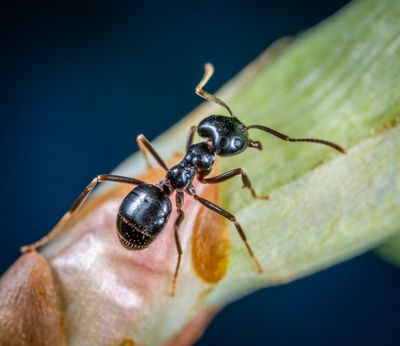
Argentine Ant
Linepithema humile
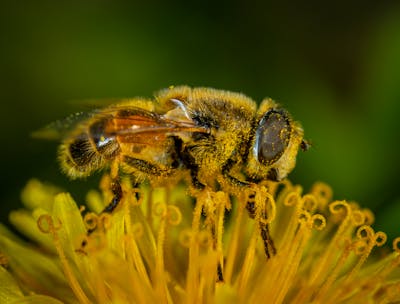
Honeybee
Apis mellifera

Termite (Macrotermes)
Macrotermes bellicosus

Army Ant
Eciton burchellii

Naked Mole Rat
Heterocephalus glaber

Damaraland Mole Rat
Fukomys damarensis

Fire Ant
Solenopsis invicta
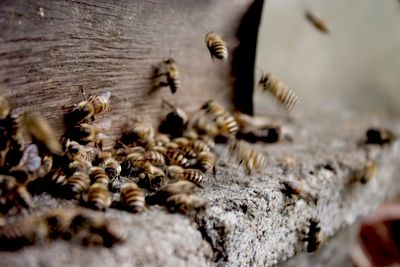
Paper Wasp
Polistes dominula
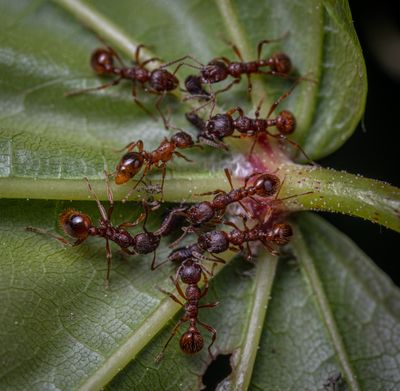
Honeypot Ant
Myrmecocystus mexicanus

Bumblebee
Bombus terrestris

Orca
Orcinus orca

African Wild Dog
Lycaon pictus

Gray Wolf
Canis lupus

African Elephant
Loxodonta africana

Bottlenose Dolphin
Tursiops truncatus
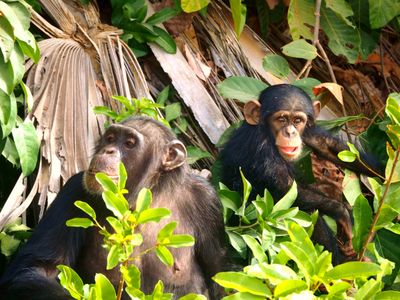
Chimpanzee
Pan troglodytes
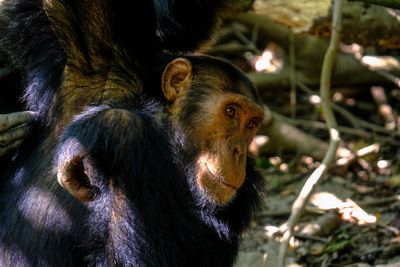
Bonobo
Pan paniscus
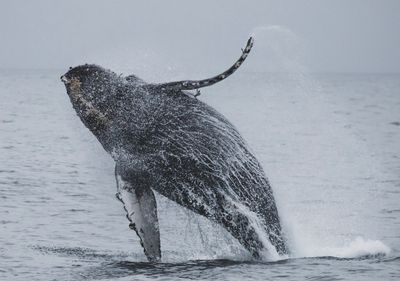
Humpback Whale
Megaptera novaeangliae

Meerkat
Suricata suricatta

Harris's Hawk
Parabuteo unicinctus

Spotted Hyena
Crocuta crocuta

Sperm Whale
Physeter macrocephalus

Common Raven
Corvus corax

New Caledonian Crow
Corvus moneduloides

Capybara
Hydrochoerus hydrochaeris
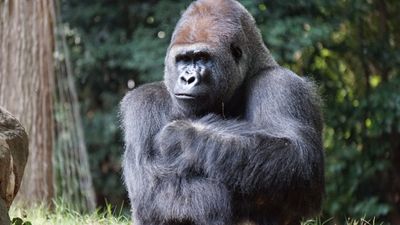
Gorilla
Gorilla beringei

Lion
Panthera leo

Vampire Bat
Desmodus rotundus

Olive Baboon
Papio anubis

Emperor Penguin
Aptenodytes forsteri

Common Marmoset
Callithrix jacchus

African Grey Parrot
Psittacus erithacus

Prairie Dog
Cynomys ludovicianus
Cleaner Wrasse
Labroides dimidiatus

Norway Rat
Rattus norvegicus

Whale Shark
Rhincodon typus

Plains Zebra
Equus quagga

American Crow
Corvus brachyrhynchos

Wildebeest
Connochaetes taurinus

American Bison
Bison bison

Sea Otter
Enhydra lutris

Greater Flamingo
Phoenicopterus roseus

Sociable Weaver
Philetairus socius

Coyote
Canis latrans

Orangutan
Pongo pygmaeus

European Badger
Meles meles

Clownfish
Amphiprion ocellaris
Giraffe
Giraffa camelopardalis

Oxpecker
Buphagus africanus

Pistol Shrimp & Goby
Alpheus randalli

Cattle Egret
Bubulcus ibis

Hermit Crab
Pagurus bernhardus

Honeybadger
Mellivora capensis

Common Starling
Sturnus vulgaris

Hippopotamus
Hippopotamus amphibius

House Cat
Felis catus

Three-toed Sloth
Bradypus variegatus

Green Sea Turtle
Chelonia mydas

White Rhino
Ceratotherium simum

Moose
Alces alces

Warthog
Phacochoerus africanus

Porcupine
Hystrix africaeaustralis

Red Fox
Vulpes vulpes

Komodo Dragon
Varanus komodoensis

Alligator
Alligator mississippiensis

Barn Owl
Tyto alba

Wolverine
Gulo gulo

Coral (Staghorn)
Acropora cervicornis

Praying Mantis
Mantis religiosa

Common Octopus
Octopus vulgaris

Snow Leopard
Panthera uncia

Tiger
Panthera tigris

Polar Bear
Ursus maritimus

Tasmanian Devil
Sarcophilus harrisii

Great White Shark
Carcharodon carcharias

Black Mamba
Dendroaspis polylepis

Sydney Funnel-web Spider
Atrax robustus
Key Insight: The scale reveals that true collaboration — not mere aggregation or coexistence — requires specific evolutionary pressures: kin selection, reciprocal altruism, or shared environmental challenges. Species at the top of the scale have evolved specialized neural, chemical, or behavioral systems for collective action. Human institutions, by contrast, actively suppress the collaborative capacities that biology has given us.
The Mechanics of Natural Selection
Given that evolution is essentially a competition for genetic representation, the prevalence of collaboration seems paradoxical. Four primary pathways resolve this.
Kin Selection (Hamilton's Rule)
rB > C
r = genetic relatedness, B = benefit to recipient, C = cost to actor
Altruistic behavior as indirect genetic fitness. By helping relatives survive, an individual ensures the survival of shared genes. This explains the extreme self-sacrifice seen in eusocial insect colonies. (Hamilton, 1964. The genetical evolution of social behaviour. Journal of Theoretical Biology.)
Reciprocal Altruism
Governs collaboration between unrelated individuals. Based on "I help you now, you help me later," it requires sophisticated cognitive machinery to track past interactions and identify "cheaters." Widely observed in primates, dolphins, and ravens. (Trivers, 1971. The Evolution of Reciprocal Altruism. Quarterly Review of Biology.)
Byproduct Mutualism
Collaboration emerges not from shared intent, but as a byproduct of self-interest. Schooling fish confuse predators simply by swimming together — no active coordination required, yet the group benefits from reduced individual risk. (Connor, 1995. The benefits of mutualism. American Naturalist.)
Group Selection
Historically controversial: groups that cooperate effectively outcompete groups characterized by internal conflict. Eusocial colonies function so efficiently as a unit that individual self-interest becomes evolutionarily irrelevant. (Wilson & Wilson, 2007. Rethinking the Theoretical Foundation of Sociobiology. Quarterly Review of Biology.)
Nested Cooperation Across Scales
Individuals cooperate within groups
Cells cooperate within a body
Cells cooperate within tissues
Genes cooperate within a genome
At each level, collaborative networks enable emergence of higher-order, more resilient systems
Profound Takeaway: Competition and cooperation are not opposites but operate at different scales simultaneously. Genes cooperate within a genome; cells cooperate within a tissue; individuals cooperate within a society. At each level, synergy is what allows for the emergence of a higher-order system.
Inter-Species Synergy
"Team" is a functional category, not a biological one. When interests align and communication is possible, collaboration can emerge across any divide.
Cross-Species Collaboration Network
Honeyguide Birds & Humans
AfricaGreater honeyguide birds lead humans to beehives. Humans use tools to open the hive, taking honey, while the bird consumes wax and larvae otherwise inaccessible. A culturally-transmitted collaboration involving complex cues and signals. (Spottiswoode et al., 2016. Reciprocal signaling in honeyguide-human mutualism. Science.)
Ravens & Wolves
Northern HemisphereRavens guide wolf packs to prey. After wolves make the kill, ravens scavenge the remains. This relationship likely influenced early human-wolf (and eventually human-dog) collaboration during the Paleolithic era. (Heinrich, 1999. Mind of the Raven. HarperCollins.)
Cleaner Wrasse & Reef Fish
Coral ReefsCleaner wrasse operate "stations" where larger fish come to have parasites removed. This service economy relies on trust; clients observe the cleaner's "reputation" before engaging. (Bshary & Grutter, 2006. Image scoring in a cleaner mutualism. Nature.)
Cattle Egrets & Water Buffalo
Global TropicsThe buffalo gets a warning system against predators; the egret gets a steady supply of insects flushed out by the buffalo's movement. A classic mutualistic early-warning alliance. (Telfair, 2006. Cattle Egret. Birds of North America Online.)
Key Insight: These examples highlight that “team” is a functional category rather than a biological one. When interests align and communication — even if rudimentary — is possible, collaboration can emerge across any taxonomical divide.
The Neurobiology of Collective Cognition
Through "hyperscanning" — simultaneous recording of brain activity from multiple people — researchers have identified Inter-brain Synchrony (IBS) as a critical marker of collaborative success.
Inter-Brain Synchrony (IBS) — Hyperscanning Visualization
Neural Alignment Findings (2025–2026)
| Brain Region | Collaborative Function | Evidence |
|---|---|---|
| Prefrontal Cortex (PFC) | Joint cognitive regulation and shared attention | Significant synchrony during active discussion |
| Inferior Frontal Gyrus (IFG) | Social cognition and reward-based decision making | Elevated synchrony during incentivized team tasks |
| DLPFC | Real-time monitoring of partner's cues | Synchrony observed in time-estimation tasks |
| Socio-emotional Areas | Trust and social bond formation | Higher IBS in dyads with a shared identity |
Mirror Neuron System
Mirror neurons allow individuals to “simulate” the actions and emotions of their partners, creating a foundation of rapport and mutual prediction. This is the neural basis for empathy and anticipation in collaborative settings.
Oxytocin Release
The “trust hormone” enhances sensitivity to social cues and has been shown to restore altruistic preferences even in high-stress, “loss-domain” decision-making contexts. It is the chemical bridge between cognition and social bonding.
IBS Predicts Performance
Higher IBS during a task significantly predicts improved performance — more accurately than self-reported team belonging. (Reinero et al., 2021. Inter-brain synchrony in teams. Social Cognitive & Affective Neuroscience.)
VR Enables IBS
Immersive virtual environments can facilitate IBS at levels comparable to physical co-presence, provided the task requires high interaction. (Dikker et al., 2021. Brain-to-brain synchrony tracks real-world dynamic group interactions. Current Biology.)
Being 'In Sync' is Real
'Being in sync' is a measurable, physical reality — not just a metaphor. It emerges specifically during active, goal-directed collaborative interactions. (Hasson et al., 2012. Brain-to-brain coupling. Trends in Cognitive Sciences.)
Human-AI Teaming & The Agentic Future
AI is expanding from a tool to an agentic partner — capable of perceiving, reasoning, and acting autonomously within complex workflows.
The Age of Agentic AI
2025–2026 Paradigm Shift
Agentic AI systems are semi- or fully autonomous, capable of perceiving, reasoning, and acting on their own within complex workflows. This marks the beginning of “hybrid” co-intelligent teams where the line between human and digital labor is blurred. Collaborative networks are now a cross-ontological endeavor.
MIDAS Framework — Progressive Ideation Pipeline
Meta-cognitive Ideation through Distributed Agentic AI System
Clarifies the initial problem statement into a structured format.
Organizes the conceptual space for initial generation.
A sub-system of two agents (Explorer & Refiner) that produces diverse concepts.
Evaluates ideas against previously generated ones to prevent semantic clustering.
Researches external literature to ensure the idea is truly novel.
Performs reality checks and refines "fuzzy" notions into actionable solutions.
Projected margin gains by 2029 for organizations optimizing human-AI collaboration
Autonomy achieved by Aletheia agent — generating publishable-quality research papers without human intervention
The MIDAS framework uses a distributed team of specialized AI agents emulating human meta-cognition
Organizational Impact: Hiring models based on static experience are being replaced by those prioritizing meta-skills: learning agility, adaptability, and the capacity to co-create in hybrid teams. The “compound LLM” strategy — using the right model for the right task — elevates the human from a passive filterer to an active, participatory partner.
Governing the Commons
Elinor Ostrom's eight design principles provide a roadmap for institutions that endure centuries without succumbing to the 'tragedy of the commons.'
Ostrom's Design Principles — Modern Application
Governing Common-Pool Resources in 2025
| Principle | Modern Application | Critical Insight |
|---|---|---|
| Clearly Defined Boundaries | Near-Earth Orbit and Space debris management | Essential to define who has rights to harvest/use shared resources |
| Collective-Choice Arrangements | Healthcare co-design (CO-SHARE) | Participants must participate in rule-making to ensure buy-in |
| Monitoring and Sanctions | Fusion energy (ITER) regulatory frameworks | Essential for maintaining safety and trust across nations |
| Nested Enterprises | Polycentric Governance models | Large-scale systems require multiple layers of autonomous control |
Global Mega-Projects — The Pinnacle of Collaboration
ITER
International Thermonuclear Experimental Reactor
The world's largest tokamak experiment, designed to prove fusion as a large-scale carbon-free energy source. A collaboration evolving beyond public funding into a public-private ecosystem accelerating innovation.
CERN High-Luminosity LHC
High-Luminosity Large Hadron Collider
The upgrade will increase the LHC's data-taking potential by a factor of ten, probing the Standard Model with unprecedented precision. A 'culture for success' balancing rigorous engineering with self-organization.
Design Principle: These projects succeed because they create a “culture for success” that balances rigorous engineering with the flexibility for self-organization — a direct application of Ostrom's principles on an interstellar and subatomic scale.
Failure Modes
Despite its power, collaboration is prone to structural and psychological fragility. Understanding these pitfalls is essential for "debugging" social systems.
Collaboration Fragility Map
Confusing Cooperation for Collaboration
The most common failure. Teams think they are collaborating because they are "being pleasant" and sharing info, but they maintain individual silos and protect their own lanes when hard decisions arise. (Hansen, 2009. Collaboration. Harvard Business Press.)
Free-Riding and Cheating
In any cooperative system, there is an incentive for individuals to take benefits without paying costs. Biological and social systems have evolved "worker policing" and "graduated sanctions" — but a lack of explicit monitoring will inevitably lead to breakdown. (Ratnieks & Wenseleers, 2008. Altruism in insect societies. Trends in Ecology & Evolution.)
Asymmetry of Investment
When one party contributes far more than another, resentment builds. Research on ravens shows that "fairness tracking" is a precursor to stable cooperation — if a partner perceives inequitable rewards, they will cease to collaborate. (Massen et al., 2015. Tolerance and reward equity predict cooperation in ravens. Scientific Reports.)
Scale Collapse
True collaboration requires high levels of shared cognition and trust. As groups grow, they shift toward coordination or hierarchy because the cognitive load of "entangled" engagement becomes unsustainable.
Negative Interdependence
If one party's gain is perceived as another's loss, collaboration becomes structurally impossible. This often happens when teams are pitted against each other for a single bonus pool or recognition.
Mitigation Strategy: Large organizations must continuously recreate small, agile teams to achieve high-order innovation. Explicit monitoring, graduated sanctions, and fairness-tracking mechanisms — borrowed from both biological and institutional design — are essential safeguards against collaborative entropy.
The Philosophical Imperative of Interdependence
The “survival of the fittest” is not a competition between individuals, but a competition between modes of interaction. Groups, species, and systems that build robust collaborative networks consistently out-compete those that remain fragmented and solitary.
Collaboration is the force that allowed simple cells to become complex organisms, that allowed solitary primates to become global civilizations, and that is now allowing humans to partner with artificial intelligence to solve the subatomic mysteries of the universe. It is a biological imperative, a neurobiological reality, and a geostrategy for survival.
As we look toward the remainder of the 21st century, the primary question for any leader, scientist, or citizen is no longer “How can I win?” but “Where on the spectrum of collaboration am I operating?”
MIDAS Framework
Distributed agentic systems that partner with human meta-cognition
Ostrom's Principles
Institutional design for enduring management of shared resources
Inter-Brain Synchrony
Cultivating measurable neural alignment through shared goals
“The bonds we form are the most powerful force in nature, and it is by working together that we have always succeeded.”